Noosa's lifestyle invites individuals outdoors. Surf breaks, national park trails, river activities, hospitality locations, busy roadways, and a large visitor population all come together in one small area. That mix is precisely why strong emergency treatment skills matter here more than a lot of places.
Over the years I have seen whatever from small reef cuts and allergies at the beach, through to serious medical emergency situations in workplaces and on treking tracks. The distinction between an onlooker who knows what to do and one who freezes can be determined in minutes of oxygen to the brain, blood loss, or discomfort relief.
If you are searching for an emergency treatment course in Noosa, you are likely wading through a great deal of choices: full first aid, CPR just, childcare units, work environment packages, combined online formats, weekend courses, refresher sessions. Picking the best Noosa first aid course is easier once you comprehend how each course in fact operates in reality and which one fits your situation.
This guide walks through the primary emergency treatment training options in Noosa, what you will discover, how long they take, how frequently you need to revitalize, and how to match a course to your needs, whether you are a parent, tradie, surf enthusiast, carer, or service owner.
Why emergency treatment training matters so much in Noosa
Locals know how quickly conditions can alter here. One minute you are delighting in the water at Main Beach or along the river, the next you are assisting somebody with a presumed spinal injury, a sting, or a breathing problem. Heat, dehydration, marine threats, traffic around tourism zones, and active sports all play a part.
First help training in Noosa is not just a box-ticking workout for compliance. It is a useful skill set customized to precisely these kinds of situations. When I train individuals in coastal areas, several patterns repeat:
People ignore how exhausting it is to perform CPR effectively on the floor for several minutes.
Most have never ever used an AED (defibrillator) in the past, although you now see them at surf clubs, health clubs, going shopping centres, and workplaces.
Parents and carers typically feel quite confident everyday, right up until they are confronted with choking, seizures, or head injuries.
The point of a solid emergency treatment course in Noosa is to close those gaps before someone you care about is the one who needs help.
Understanding the main first aid course types in Noosa
Most recognised emergency treatment training in Noosa follows the nationwide systems of competency from the Australian training structure. Suppliers like Emergency Treatment Pro Noosa, community organisations, and other signed up training organisations generally provide extremely comparable core units, even if their branding and delivery styles differ.
Provide CPR - HLTAID009
The CPR course in Noosa, typically listed as HLTAID009 Offer cardiopulmonary resuscitation, focuses simply on keeping someone breathing and circulating blood up until paramedics arrive. It is short, highly useful, and suggested every year.
You practise:

Adult, child, and infant CPR on manikins
Use of AEDs that you may find at browse clubs, schools, and shopping centres
Basic management of an unresponsive person
CPR training in Noosa fits anyone who works around people, particularly in fitness centers, hospitality, schools, early knowing services, or water centres. Lots of companies accept an annual CPR refresher course in Noosa as part of their security requirements, even if the full first aid component is renewed less often.
Provide Emergency treatment - HLTAID011
This is usually the primary Noosa first aid course individuals consider when somebody states "I require my first aid certificate." HLTAID011 Offer Emergency treatment covers both CPR and a much wider range of first aid responses.
In a common one-day or mixed course you cover:
Recognition and management of cardiac arrest, stroke, asthma, and anaphylaxis
Bleeding control, shock, and fractures
Burns, injuries, and soft tissue injuries
Bites and stings, which are extremely pertinent across Noosa's beaches and bushland
Basic management of head, neck, and spinal injuries
You likewise modify CPR and AED use. Many offices that require a "designated first aider" request for an existing Offer Emergency treatment certificate, not simply CPR. If someone points out a standard Noosa emergency treatment certificate, this is typically the one.
Childcare and education emergency treatment - HLTAID012
For teachers and support staff in early childhood or school settings, the unit HLTAID012 Offer First Aid in an education and care setting is normally required. This is often referred to as an integrated first aid and CPR course in Noosa for child care staff.
Content overlaps heavily with HLTAID011 however goes deeper into:
Paediatric CPR
Common youth diseases and injuries
Asthma and anaphylaxis management in education settings
Legal and documents requirements in child care and schools
If you work in a Noosa child care centre, as a household daycare educator, or in early main education, check your regulatory body requirements. They usually define this precise system, not simply basic first aid training in Noosa.
Advanced and specialised courses
Beyond the mainstream Noosa first aid courses, you will sometimes see more specialised alternatives, particularly through bigger companies or local community organisations:
Advanced resuscitation and oxygen administration, typically utilized for surf lifesavers, dive professionals, or some security roles
Remote or wilderness first aid, useful for outdoor guides, adventure tourism, or individuals who work in more separated hinterland locations
Low-voltage rescue and CPR for electricians
These are usually taken on top of, not rather of, a standard emergency treatment course in Noosa.
Common Noosa first aid courses at a glance
Here is a quick photo that lots of regional service providers, consisting of Emergency treatment Pro Noosa and similar organisations, tend to provide:
- HLTAID009 Provide cardiopulmonary resuscitation (CPR course Noosa, about 2 to 3 hours) HLTAID011 Offer Emergency treatment (core Noosa first aid course, typically 1 day with pre-work) HLTAID012 Provide First Aid in an education and care setting (for childcare and schools) Annual CPR refresher course Noosa (short upgrade class using HLTAID009) Occasional advanced or remote Noosa emergency treatment training for specialised roles
Matching the ideal course to your situation
Noosa is small enough that a lot of us wear a number of hats. You might be a hospitality worker who surfs before work and has kids in the house. That is why it helps to begin with how you live and work, then map that to the right emergency treatment and CPR course in Noosa.
Parents, grandparents, and carers
If you hang around looking after kids, whether your own or others, I highly suggest at least a complete Noosa emergency treatment course plus CPR. You want confidence with:
Infant and child CPR
Choking in little children
Fever, seizures, and allergic reactions
Falls, head knocks, and playground-style injuries
For those utilized in official child care or early education, the HLTAID012 unit is often compulsory. Even for member of the family who are not required by law to train, sitting that childcare-focused course can be eye opening. Many grandparents remark that CPR techniques and allergy management have actually altered significantly because their kids were young.
Surf, water, and outside enthusiasts
Between Noosa Main Beach, Sunshine Beach, the river, and the national forest tracks, water and outdoor incidents are high up on the list here. If you surf, paddle, trek, or guide others outdoors, a good mix is:
Current CPR certificate (CPR Noosa courses are simple to find in short formats)
A complete Supply Emergency treatment certificate that covers bleeding, fractures, and environmental conditions
Optional: advanced resuscitation or remote location emergency treatment if you guide trips or work far from immediate ambulance access
I have seen experienced internet users who did not know how to support a believed back injury in the shallows, and experienced hikers who were not sure how to treat heat fatigue. Doing the right first aid training in Noosa assists close the space in between water self-confidence and emergency situation competence.
Tradies, construction, and industrial workers
Many Noosa work environments in building, trades, and light market need a certain number of personnel with a valid emergency treatment certificate. If you are on website, your threat profile includes:
Falls from heights
Crush injuries or heavy impacts
Electrical incidents
Serious bleeding and fractures
In these environments, the baseline is generally HLTAID011 Supply First Aid, restored every 3 years, with annual CPR refreshers. Some trades also need low-voltage rescue combined with CPR, so if you are an electrical contractor or work around live installations, check those requirements specifically.
Hospitality, tourism, and retail
In an area with heavy tourism, hospitality venues and merchants are frequently first on the scene for choking, passing out, heat distress, and heart occasions. Personnel in these areas take advantage of both emergency treatment and CPR courses in Noosa, due to the fact that they:
Work straight with the public in congested settings
Often see events involving alcohol, heat, and dehydration
Are close to, however not inside, medical facilities
Many hotels and resorts desire a minimum of one skilled first aider on each shift, and some locations motivate all supervisors to acquire a first aid certificate in Noosa for simple coverage. The combination of Offer First Aid plus regular CPR training in Noosa normally pleases this.
Aged care and community assistance workers
If you deal with older clients, in-home support, or domestic aged care around Noosa, you are likely to encounter:
Falls and fractures
Cardiac and respiratory conditions
Medication issues
Pressure sores and chronic conditions
Your employer may need HLTAID011 as a minimum, and some functions choose staff who also complete more advanced units or regular CPR Noosa refreshers. Practically, the more exposure you need to frail or medically complicated customers, the better it is to remain dramatically practiced in CPR and crucial indications assessment.
Business owners and managers
For companies, the concern is not "Who has an interest in first aid?" However "How many qualified first aiders do we require and what level?" In Noosa businesses, Safe Work Australia guidance and industry-specific codes of practice shape your obligations.
Generally, office-based work environments might only require a little number of personnel with HLTAID011. Greater threat work environments, or those with large crowds like occasion venues, might require a higher ratio of experienced very first aiders and more regular CPR course participation. Some Noosa emergency treatment training companies will assist you map your risk level to the best mix of emergency treatment and CPR courses, which is worth benefiting from if you do not have an internal WHS specialist.

What to expect on the day of your Noosa emergency treatment course
People are frequently anxious before their first course. A bit of upfront clarity helps.
Most emergency treatment courses in Noosa utilize a blended format. You complete a theory element online, then participate in a much shorter in-person useful session. For a complete Provide Emergency treatment course, you might spend a number of hours on e-learning in the house, then attend a 5 to 6 hour practical day at a Noosa training place. For a standalone CPR course Noosa locals typically only invest 1 to 2 hours online, then 1.5 to 2 hours face to face.
On the day, your fitness instructor will walk you through:
How to recognise an emergency and use DRSABCD
Hands-on CPR on adult, child, and baby manikins
Using an AED reasonably, including the script and prompts
Scenario-based practice: for example, a fall from a ladder, a beach incident, or a coffee shop consumer with chest pain
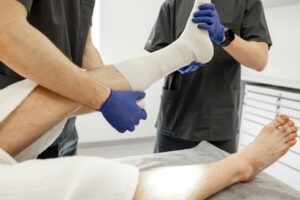
Dressing wounds, applying slings, using plasters effectively
You will be evaluated on practical abilities and sometimes a short composed or verbal element, depending on the course and provider.
A couple of practical tips from experience:
Wear comfy clothes that you can kneel and flex in. CPR is carried out on the floor, not on tables or chairs.
If you have knee, back, or mobility problems, recommend your Noosa first aid fitness instructor before the class. Fitness instructors can typically adjust how you demonstrate skills, provided the core requirements are met.
Hydrate and consume. These courses can be surprisingly tiring, and low blood sugar does not blend well with kneeling CPR practice in a warm room.
Arrive a little early. Noosa traffic and parking, specifically near main training centers, can be unforeseeable in vacation periods.
How long your Noosa emergency treatment certificate stays valid
There is frequently confusion about expiration. Technically, systems of proficiency like HLTAID011 do not end in the exact same way a passport does, however market standards and policies anticipate recertification at set intervals.
The typical pattern throughout Noosa emergency treatment training is:
Provide Emergency treatment (HLTAID011): revitalize every 3 years
Childcare/ education emergency treatment (HLTAID012): likewise normally every 3 years, though some companies choose more regular updates
Provide CPR (HLTAID009): refresh every 12 months
That is why you will see numerous suppliers promoting specific CPR refresher course Noosa choices. They are much shorter, more affordable, and focused only on keeping CPR competency instead of repeating all bandaging and medical material each year.
If you operate in controlled sectors like childcare, aged care, or certain health roles around Noosa, your organisation might have more stringent requirements. Constantly follow the tighter guideline: if legislation says 3 years but your company states 2, treat 2 as your genuine deadline.
Choosing the ideal Noosa first aid training provider
There are several good-quality first aid courses in Noosa, so choosing often comes down to practical and personal elements rather than huge differences in core content. Still, a couple of details separate a smooth learning experience from an aggravating one.
Look for a company that:
- Is an existing registered training organisation (RTO) or a recognized partner, so your first aid certificate Noosa wide is nationally recognised Offers course codes that match what your employer or licence needs (for instance HLTAID011, HLTAID012, HLTAID009) Runs sessions at times and areas you can reasonably reach, factoring in Noosa's traffic and parking during hectic seasons Uses a lot of hands-on circumstances, not just slides and videos, so you leave with muscle memory as well as head knowledge Communicates clearly about pre-course requirements, ID, payment, and what to cause the day
First Aid Pro Noosa and other trustworthy local suppliers typically publish detailed course outlines on their sites. It deserves 5 minutes of checking so you do not incorrectly book a CPR-only class when you really require a complete Noosa first aid course with more comprehensive coverage.
Online, blended, or face to face - what works best?
Most first aid training in Noosa now utilizes some sort of combined model. That means theory online, skills face to face. There are trade-offs.
Pure face to face courses can feel more immersive, however they normally need a longer single day and more time far from work. Combined models give you flexibility to work through reading, videos, and quizzes in your home in much shorter blocks.
What you can not skip is in-person CPR and first aid practice. To issue a recognised first aid certificate Noosa companies must observe your skills live, not just accept an online test. If a course provides a "100% online" first aid certificate, be extremely cautious. Many companies and regulators will decline it.
From what I have actually seen, the best results come when students:
Complete the online part a few days in the past, rather of hurrying it late the night before
Use the useful session to ask concerns connected to their genuine workplaces or household situations
Treat situations seriously, despite the fact that you are "just practicing"
That combination of preparation and practice tends to stick, so six months later you can still remember what to do without pulling out a manual.
How physically demanding is CPR and emergency treatment training?
This is a fair question that people in some cases hesitate to ask. CPR training in Noosa does need you to kneel on the flooring and compress a manikin's chest to an appropriate depth for a minimum of 2 minutes. If you have actually never ever tried, it is more difficult than it looks.
For most reasonably healthy adults, it is tiring however workable. For those with joint concerns, older age, pregnancy, or certain impairments, it may need adaptations.
Trainers usually motivate you to:
Use right body mechanics rather than arm strength alone
Swap with another participant throughout long practice scenarios
Rest when needed in between attempts
If you understand you have constraints, speak to the provider before reserving. They can typically plan adjustments so you can still attend a Noosa first aid course, demonstrate your abilities within safe limitations, and understand what you would carry out in a genuine emergency. The key is openness so expectations are set correctly.
Keeping your skills sharp after the course
First aid abilities fade if you do not utilize them. That is particularly real for CPR, where proper depth, rate, and sequence matter. I have actually dealt with people on their CPR refresher course Noosa sessions who understand just how much they have forgotten in just 12 months.
A couple of practical methods to preserve self-confidence between formal courses:
Mentally practice situations you are likely to face. For example, ask yourself, "If someone collapsed right here in this café, what would I do first, second, third?"
Notice AED areas around Noosa. Over a week, you will marvel the number of you spot when you actively look.
If your workplace runs emergency situation drills, volunteer to be included as a designated first aider. Simulations are far much better than no practice at all.
When your reminder e-mail comes that a refresher is due, do not disregard it. Schedule early so you have option of date and do not wind up packing at the last minute.
Many individuals only understand how important their Noosa emergency treatment training was when something actually takes place: a relative collapses, a child starts choking, a complete stranger has a seizure in a supermarket aisle. Those who had actually practiced recently explain a sense of nervousness but likewise clearness. Those who have let a certificate lapse often explain panic and later regret.
Bringing it all together
Choosing the right emergency treatment and CPR course in Noosa is not about discovering a magic or glamorous alternative. It is about matching a practical level of training to how you live, where you work, and who relies on you.
For the majority of people, a full Supply First Aid course in Noosa, topped up with annual CPR courses, is the practical backbone. Moms and dads and educators lean into childcare-focused training. High-risk markets and outdoor professionals layer on more specialised Noosa emergency treatment training as needed.
If you are not sure, speak straight with a provider such as First Aid Pro Noosa or another regional RTO. Explain your role and any regulatory requirements you know about. An excellent fitness instructor will guide you rapidly to the right choice, not the most costly one.
The financial investment is modest compared to the advantage. A single day of focused first aid training in Noosa can completely alter what happens in those crucial couple of minutes before an ambulance arrives, for your household, your associates, or the complete strangers who share your beaches, roads, and trails.
Nationally Recognised First Aid Courses Noosa Locals Trust! First Aid Pro is one of Noosa’s leading providers of accredited CPR and first aid courses. Established in 2010, our nationally registered training organisation (RTO) has equipped over 3 million Australians with essential life-saving skills through our experienced team of 110+ expert trainers. Conveniently servicing Noosa and the Sunshine Coast region, we provide top-quality, nationally accredited CPR and first aid training sessions tailored to your needs, whether for workplace requirements, career advancement, or personal safety. From childcare-specific first aid training to advanced first aid and resuscitation courses, we’ve got you covered. First Aid Pro – First Aid Course Noosa Noosa Conference Centre 73 Hilton Terrace Noosaville QLD 4566 Australia Phone: (08) 7120 2570 Secure your Noosa first aid course or CPR training with us and build the confidence to handle emergencies with a trusted Noosa first aid provider. Take the first step towards becoming a skilled and capable first aider with First Aid Pro Noosa today.
Location & Venue Details Our First Aid Pro Noosa courses are held at Noosa Conference Centre, 73 Hilton Terrace, Noosaville QLD 4566, conveniently located in the heart of Noosaville. This modern and well-equipped venue provides a professional and comfortable training environment ideal for first aid, CPR, and childcare first aid courses. It’s the perfect location for participants travelling from Noosaville, Noosa Heads, Tewantin, Sunrise Beach, and surrounding Sunshine Coast suburbs. Situated close to the Noosa River, the venue is near popular local landmarks including Noosa Marina, Noosa Civic Shopping Centre, Noosa National Park, and Hastings Street. The surrounding area offers a variety of cafés, restaurants, and takeaway outlets—perfect for enjoying lunch or coffee before or after your course. With easy access to Noosa Main Beach and nearby riverside parks, it’s also a great place to relax before or after your training. Training is conducted in spacious, air-conditioned rooms within Noosa Conference Centre, equipped with high-quality first aid and CPR training equipment and comfortable seating. The venue provides convenient onsite parking and nearby street parking for participants attending the course. The site is fully accessible, offering step-free entry and accessible restroom facilities, ensuring a smooth and inclusive training experience for all learners.